About Flash Art:
Flash Art is an international bimonthly magazine dedicated to contemporary art, exploring the evolving cultural landscape through the work of leading artists, writers, curators and others.
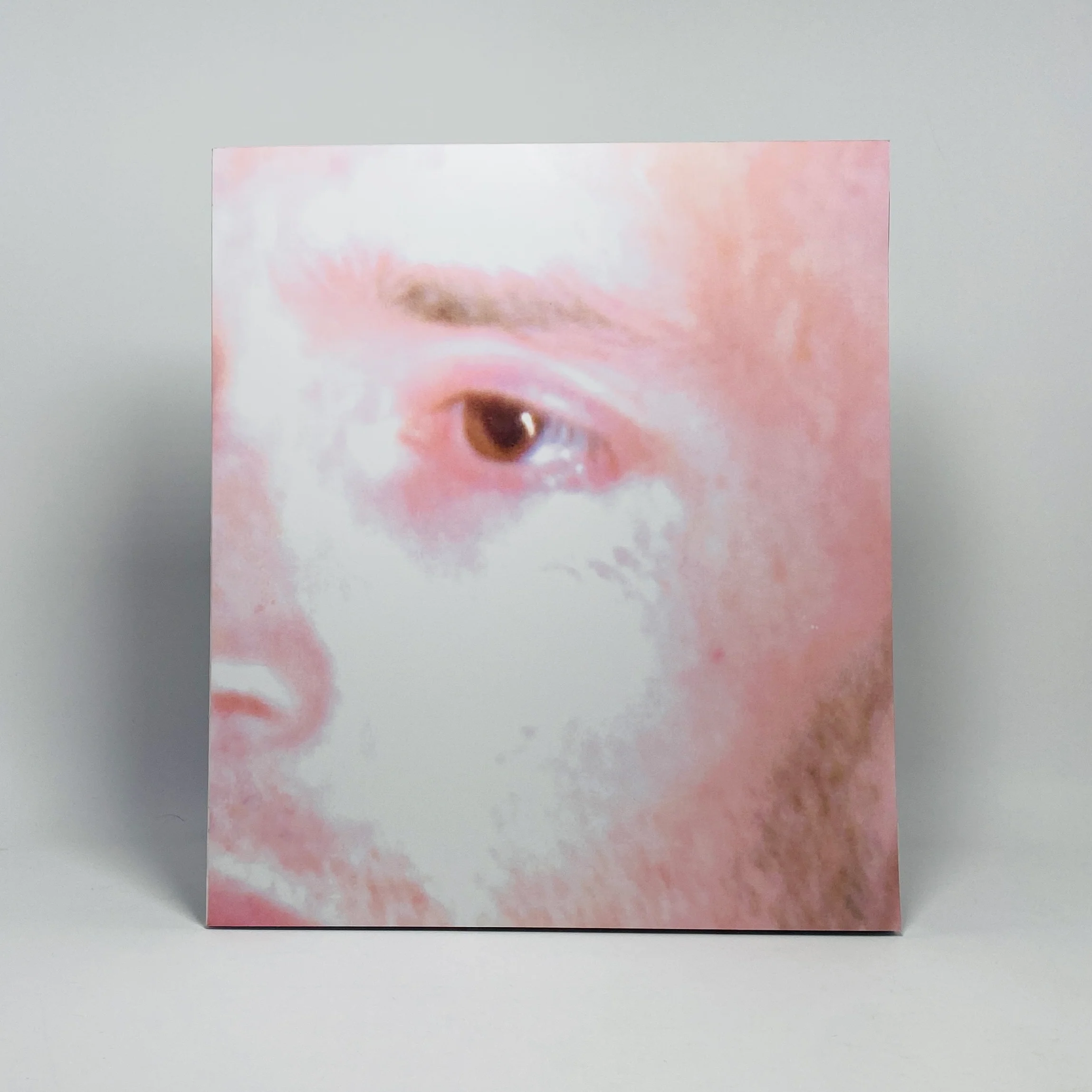
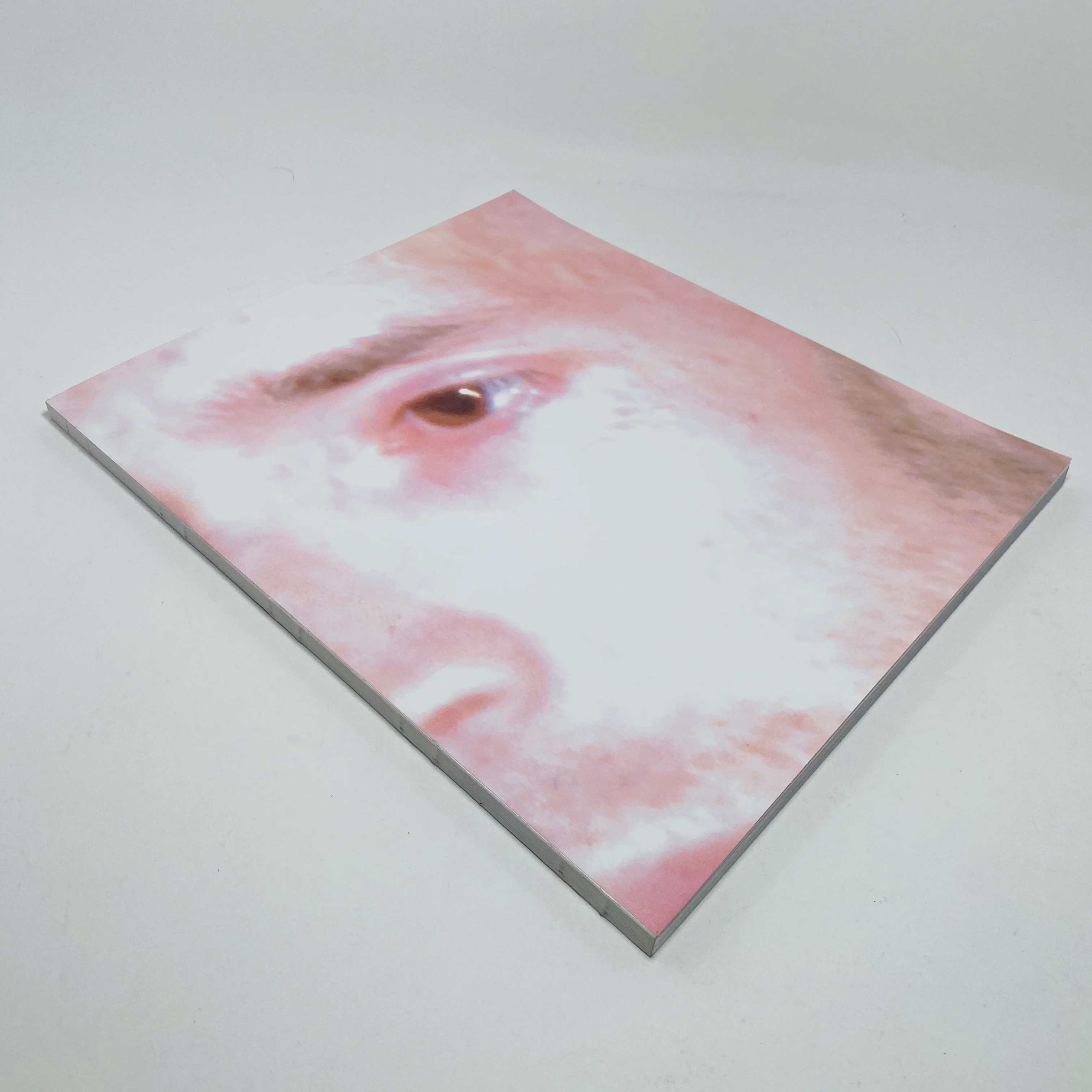
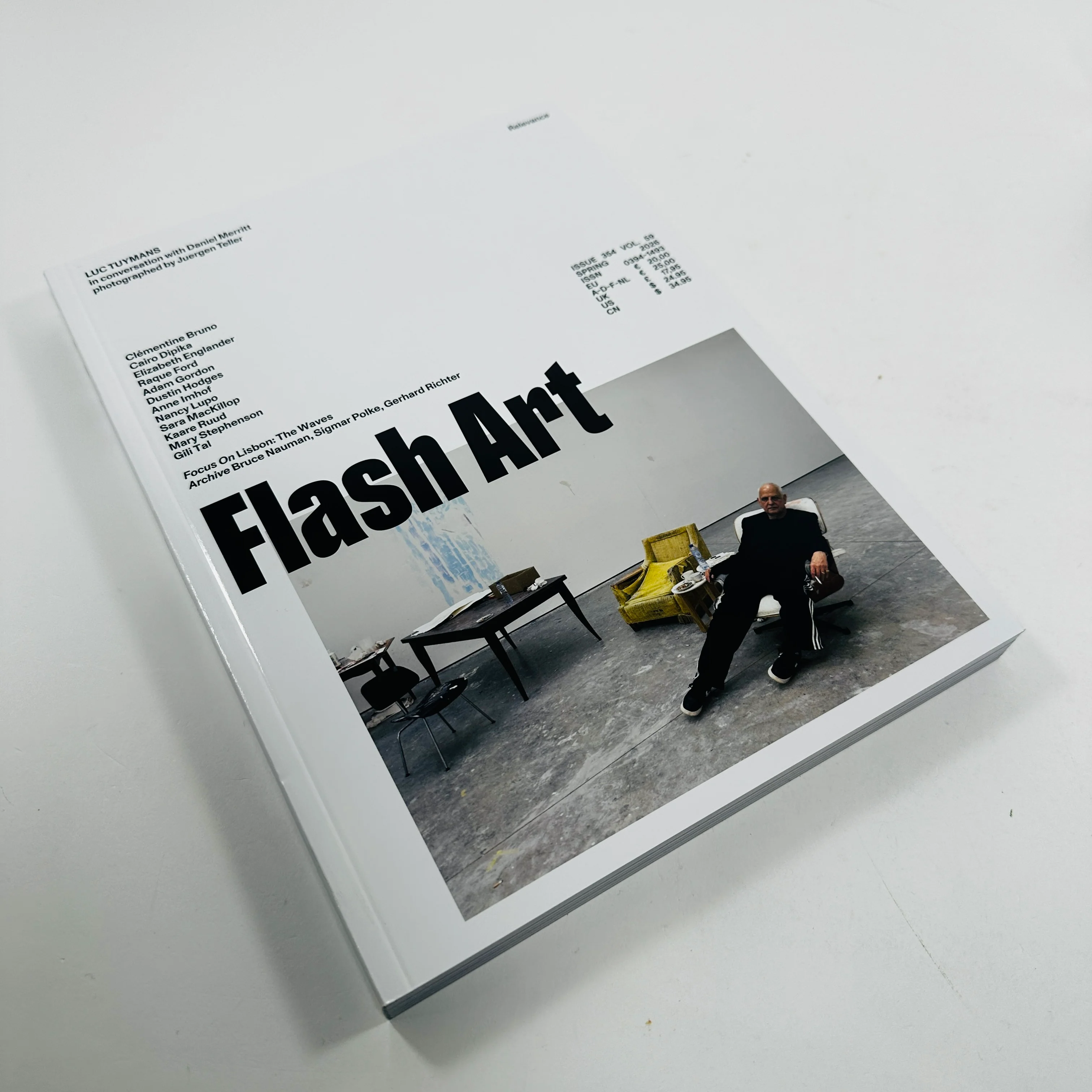
Flash Art #354 - Relevance - Spring 2026
It’s understood that humans are visual creatures, navigating the world primarily through encountered images. Visual stimulus can function as a warning, as evidence, or as a trigger for some long-lost feeling of a bygone era. The spring issue of Flash Art, “Relevance,” explores such fleeting temporalities of representation. It begs the question: What does a memory, a TV show, or a feeling look like when it’s not viewed through the eyes but recreated through the hazy lens of retrospective remembering? The artists in this issue warp media through cheeky rearrangement and sly facsimile, speaking to the persistence of vision long after its affect has engaged the retina.
The issue begins in Luc Tuymans’s Antwerp studio. Photographed by means of Juergen Teller’s humble iPhone, Tuymans meets Daniel Merritt mid-cigarette and leads him into a conversation on American artists’ involvement in the CIA during the mid-twentieth century; the technical benefits of painting with a mirror; and the memories from which he conjures his paintings.
In Porto, at Fundação de Serralves, Anne Imhof stands at the edge of a sixty-foot-long steel swimming pool, part of her installation “Fun ist ein Stahlbad.” She’s captured by Tyler Mitchell, who, in conversation with the artist, revisits formative diving-board memories from childhood, discusses how such memories find their way into one’s practice, and considers the Kafka short story that inspired Imhof’s piece.
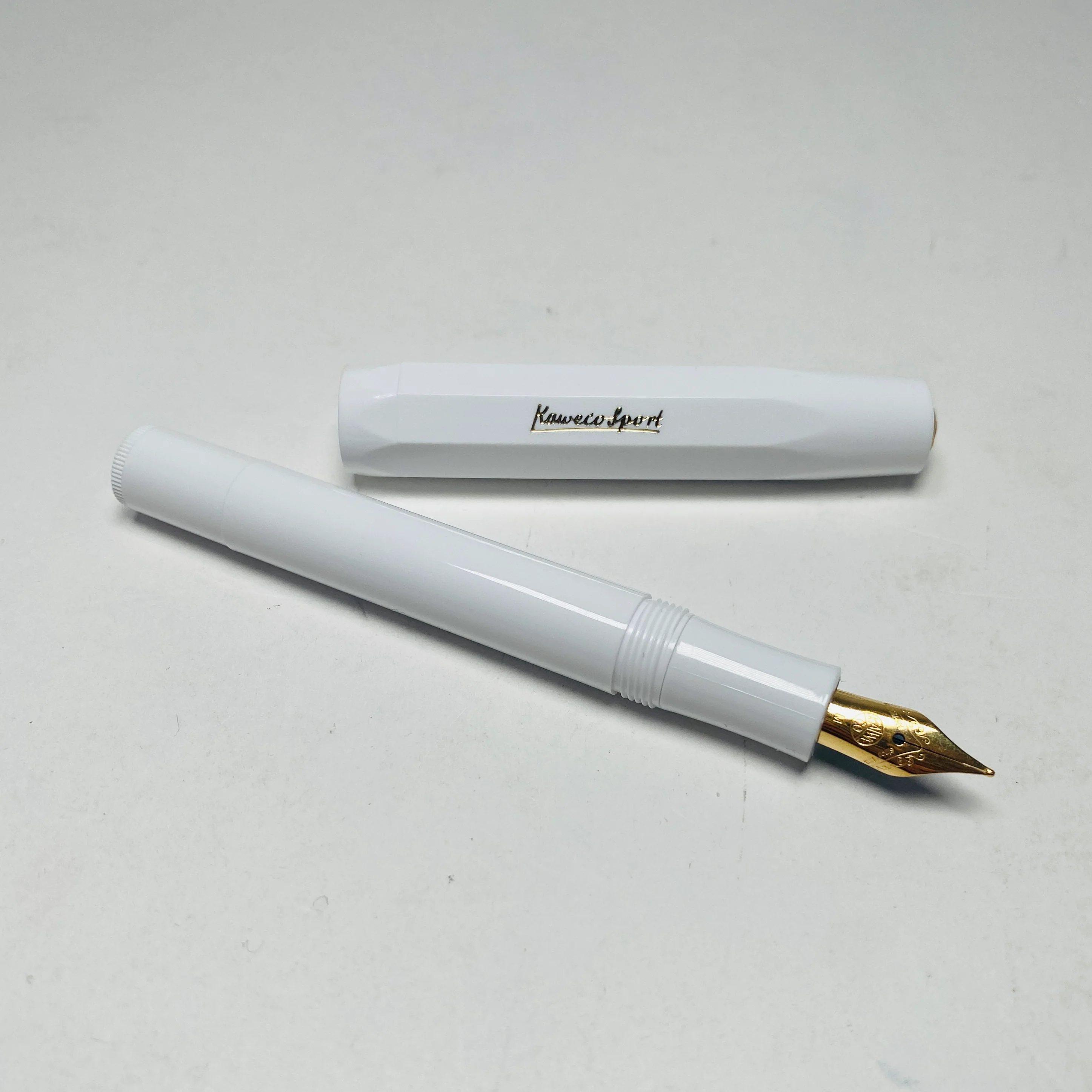
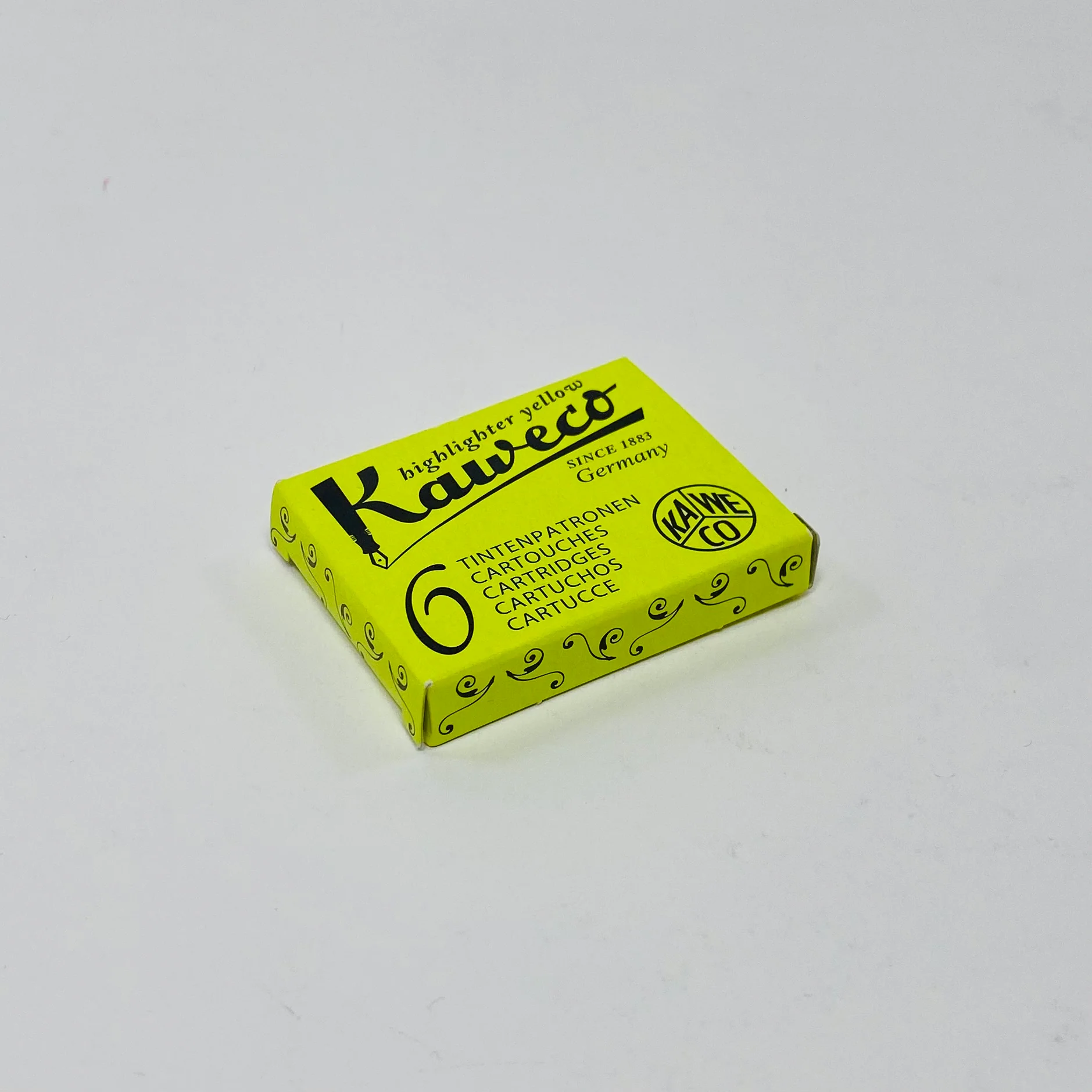
Also in this issue: Mary Stephenson, wearing JW Anderson and photographed by Benedict Brink in her studio in London, discusses with Sonja Teszler the “ghost marks” that lie dormant in the paintings of her 2026 show “Hue” at Maureen Paley, London. In the hazy, dreamlike scope of her work, she locates Louis MacNeice’s “Snow” as a guiding reference. Meditating on “Soft and Bouncy” (2026) at Galerie Buchholz in Berlin, Anya Harrison locates Gili Tal's work in a world of fracking and discarded refrigerators, ultimately coming to an understanding of what is to be done with the banal image. Nick Irvin chats with Elizabeth Englander on her relationship to death, Buddhism, and the compulsion to create vertical art. Amid pink-painted nails and a Covercraft® DustTop car cover for a 1994 Dodge Caravan, Maya Tounta and Nancy Lupo unpack the anxiety of home rentals and all the other small choices that make up a life. Margaret Kross’s reflections on Sara MacKillop’s practice connect nihilism with fluorescent highlighters, raising the question (while invoking Mark Fisher): What are we to do with all these products? In conversation with Qingyuan Deng, Raque Ford discusses how fan fiction has become a generative part of her work. Miles Huston unpacks the smelly and uncanny works of Adam Gordon that recently lurked behind a black portiere at his show “The Torture” at ZERO…, Milan. Finally, Nick Angelo takes a walk through Dustin Hodges’s “Barley Patch,” visiting with the cartoon creatures that populated the artist’s childhood and current work.
About Flash Art:
Flash Art is an international bimonthly magazine dedicated to contemporary art, exploring the evolving cultural landscape through the work of leading artists, writers, curators and others.
Every detail has been carefully considered to bring you the perfect product.

Every detail has been carefully considered to bring you the perfect product.

Every detail has been carefully considered to bring you the perfect product.

Every detail has been carefully considered to bring you the perfect product.
Flash Art #354 - Relevance - Spring 2026
It’s understood that humans are visual creatures, navigating the world primarily through encountered images. Visual stimulus can function as a warning, as evidence, or as a trigger for some long-lost feeling of a bygone era. The spring issue of Flash Art, “Relevance,” explores such fleeting temporalities of representation. It begs the question: What does a memory, a TV show, or a feeling look like when it’s not viewed through the eyes but recreated through the hazy lens of retrospective remembering? The artists in this issue warp media through cheeky rearrangement and sly facsimile, speaking to the persistence of vision long after its affect has engaged the retina.
The issue begins in Luc Tuymans’s Antwerp studio. Photographed by means of Juergen Teller’s humble iPhone, Tuymans meets Daniel Merritt mid-cigarette and leads him into a conversation on American artists’ involvement in the CIA during the mid-twentieth century; the technical benefits of painting with a mirror; and the memories from which he conjures his paintings.
In Porto, at Fundação de Serralves, Anne Imhof stands at the edge of a sixty-foot-long steel swimming pool, part of her installation “Fun ist ein Stahlbad.” She’s captured by Tyler Mitchell, who, in conversation with the artist, revisits formative diving-board memories from childhood, discusses how such memories find their way into one’s practice, and considers the Kafka short story that inspired Imhof’s piece.
Also in this issue: Mary Stephenson, wearing JW Anderson and photographed by Benedict Brink in her studio in London, discusses with Sonja Teszler the “ghost marks” that lie dormant in the paintings of her 2026 show “Hue” at Maureen Paley, London. In the hazy, dreamlike scope of her work, she locates Louis MacNeice’s “Snow” as a guiding reference. Meditating on “Soft and Bouncy” (2026) at Galerie Buchholz in Berlin, Anya Harrison locates Gili Tal's work in a world of fracking and discarded refrigerators, ultimately coming to an understanding of what is to be done with the banal image. Nick Irvin chats with Elizabeth Englander on her relationship to death, Buddhism, and the compulsion to create vertical art. Amid pink-painted nails and a Covercraft® DustTop car cover for a 1994 Dodge Caravan, Maya Tounta and Nancy Lupo unpack the anxiety of home rentals and all the other small choices that make up a life. Margaret Kross’s reflections on Sara MacKillop’s practice connect nihilism with fluorescent highlighters, raising the question (while invoking Mark Fisher): What are we to do with all these products? In conversation with Qingyuan Deng, Raque Ford discusses how fan fiction has become a generative part of her work. Miles Huston unpacks the smelly and uncanny works of Adam Gordon that recently lurked behind a black portiere at his show “The Torture” at ZERO…, Milan. Finally, Nick Angelo takes a walk through Dustin Hodges’s “Barley Patch,” visiting with the cartoon creatures that populated the artist’s childhood and current work.
About Flash Art:
Flash Art is an international bimonthly magazine dedicated to contemporary art, exploring the evolving cultural landscape through the work of leading artists, writers, curators and others.